Short answer
Use a familiar route with known distance. Record the time you spent moving and the time you spent stopped. Divide the distance by moving hours for a flat pace estimate. If you want to estimate a separate climb allowance, compare a second known leg under similar conditions.
On this page
Choose a leg that answers one question
Find a known path where you can check the distance and where the route has little sustained climb. Record what surface you walked on and whether the pack and group match the planned hike. A path near home can be useful when you can repeat the same stretch without needing a fresh route estimate every time.
Agree on the start and finish points before starting a stopwatch. Record pauses separately. If you use a recorded track, check whether the device has already excluded stationary time. Two exports labelled “moving time” can use different thresholds, and the boundary matters when the comparison is close.
Work with the time you actually walked
A 4.5 km example takes 72 minutes from start to finish, including 12 minutes stopped. Moving time is 60 minutes, so the flat estimate is 4.5 km/h. The elapsed pace is 3.75 km/h. Entering the elapsed pace and adding another 12-minute stop would count the stop twice in the same example.
Put the moving estimate in Trail time and compare it with the default Naismith pace. Keep expected stops in the planner. If two people in the group move at different speeds, calibrate the estimate to how the group travels together.
Check a climb without changing every variable
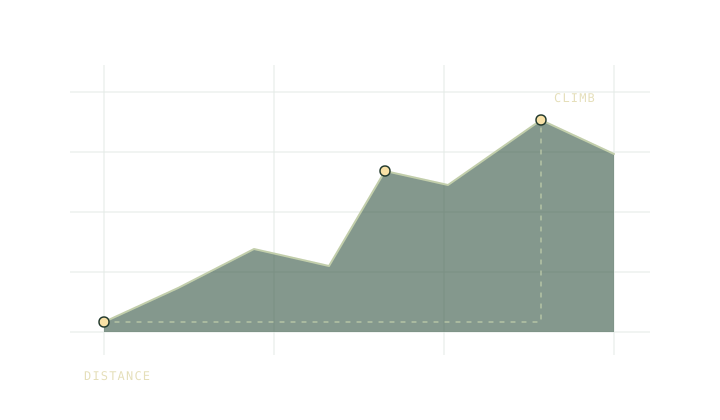
Suppose a second 3 km leg climbs 300 m and takes 73 moving minutes. At the example flat pace it would take 40 minutes on the level. The extra 33 minutes divided by three lots of 100 m gives about 11 minutes per 100 m. That is a useful observation for the same surface and pack.
The extra time also includes any effect from corners, wet rock or changing effort, so it is not a clean laboratory measure of ascent. The Tobler function note shows why slope and speed can change differently across a route. Use the climb allowance as a working planning assumption that you can improve later.
Carry the range into the next plan
Compare a normal and a slow version of a route that matters. At 4.5 km/h, 8 flat kilometres take about 107 minutes. At 4 km/h the same distance takes 120 minutes. That 13-minute gap is worth seeing before building a plan with a narrow transport deadline.
Put the slower assumptions on legs where the ground or group justifies them. The route splitting note and day hike itinerary give that difference a place on the timetable. In the trip planner, record what you measured beside any estimate you borrowed from another outing.
Write down the date and which clock convention you used. When you repeat the test, compare stopwatch time with any app’s moving-time figure. If they disagree, the stopwatch and recorded stops give you a way to reproduce the calculation without guessing at the app’s threshold. Repeat with the usual group before treating the estimate as a group pace.
Common questions
Should I average a whole trip to get flat pace?
That blends climbing, stops and terrain into the pace. It may suit another similar trip, but it gives a misleading flat pace if you then add the same costs again.
Will one calibration carry over to every hike?
Treat the number as a starting assumption for similar ground and people. Keep records of load, surface and conditions so you can judge how close they are.
Sources
Published 9 November 2026. Reviewed 9 November 2026. Sources support the figures quoted; they do not endorse Trailwright. Report a correction through the owner’s contact page.